Is Espresso Stronger Than Regular Coffee?
People argue about this constantly: is espresso stronger than regular coffee? The answer is both yes and no, depending on what you mean by "stronger." Espresso is more concentrated with intense flavour, but a standard cup of drip coffee actually contains more total caffeine. Here's the breakdown that ends the debate.
Is Espresso Stronger Than Regular Coffee?
Walk into any gym at 6am and you'll see people clutching either a large drip coffee or a double espresso. Both groups are convinced their choice is superior. Both groups think they're getting more caffeine than the other.
Here's the truth: it depends entirely on how you measure "stronger."
Espresso is more concentrated. Regular coffee has more total caffeine. And the answer to which one is actually stronger changes based on whether you're asking about taste, caffeine per ounce, or total caffeine per serving.
Let's clear this up once and for all.

What "Stronger" Actually Means
When people say "stronger," they usually mean one of three things:
- Taste intensity (bolder, more concentrated flavour)
- Caffeine concentration (mg of caffeine per ounce)
- Total caffeine (mg of caffeine in the whole drink)
Espresso wins on #1 and #2. Regular coffee wins on #3.
This is why the question confuses people. You're both right, depending on what you're measuring.

Caffeine By Volume: Espresso Wins
If you compare ounce for ounce, espresso has significantly more caffeine.
Espresso: 60-80mg per 1oz shot
Drip coffee: 12-16mg per 1oz
By this measure, espresso is roughly 4-5 times stronger than regular coffee.
This is because espresso uses a much higher coffee-to-water ratio. You're forcing hot water through finely ground coffee under high pressure, extracting a concentrated shot in 25-30 seconds.
Regular drip coffee uses more water and a slower extraction, creating a less concentrated beverage.
So yes, if you're measuring by concentration, espresso is objectively stronger.

Total Caffeine Per Serving: Regular Coffee Wins
Here's where it flips.
Single espresso shot (1oz): 60-80mg caffeine
Double espresso (2oz): 120-160mg caffeine
Small drip coffee (8oz): 95-140mg caffeine
Medium drip coffee (12oz): 140-210mg caffeine
Large drip coffee (16oz): 190-280mg caffeine
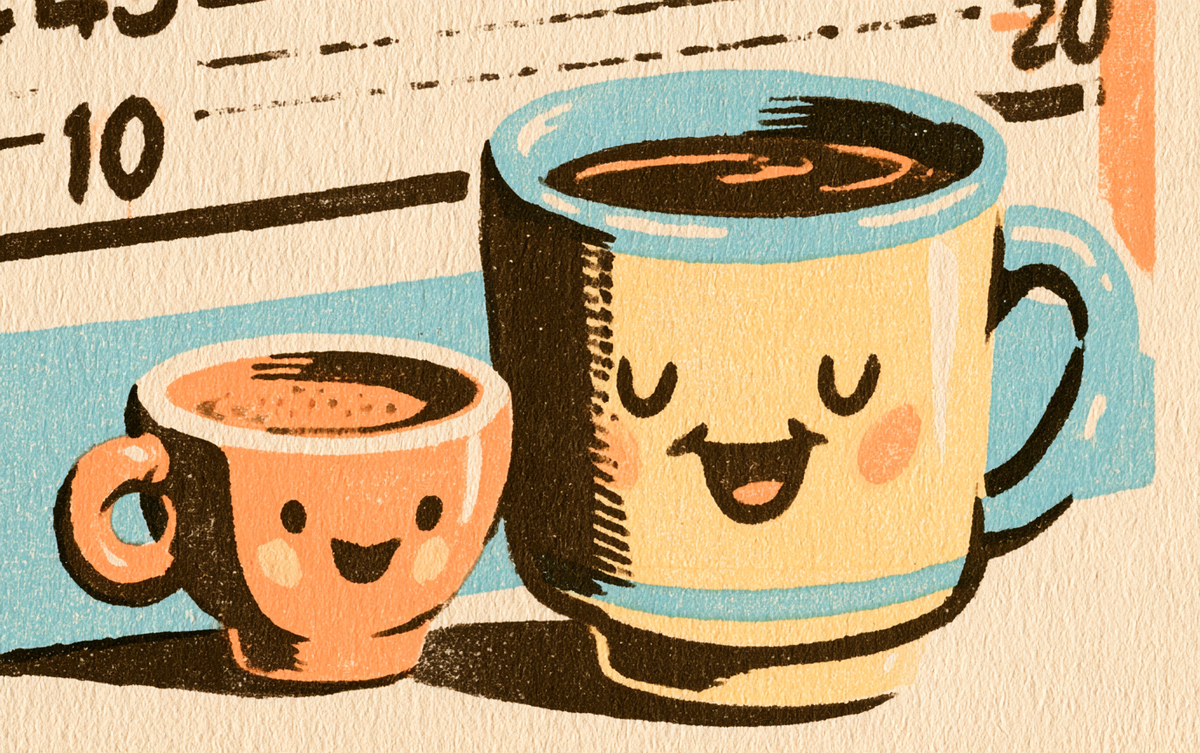
A standard cup of drip coffee has more total caffeine than a single or even double shot of espresso simply because you're drinking more liquid.
This is why people who drink large coffees often feel more wired than people who drink a single espresso, even though the espresso is "stronger" per ounce.
If your goal is maximum caffeine intake for your workout, a large drip coffee beats a double espresso every time.

Taste and Intensity: Espresso Wins Again
Espresso tastes stronger because it is stronger in terms of flavour concentration.
The high-pressure extraction pulls oils, sugars, and compounds that create a thick, syrupy body with intense flavour. You get crema (that golden foam on top), bold taste, and a finish that lingers.
Regular drip coffee is more diluted. It's smoother, less intense, easier to drink in large quantities. The flavour is there but it's mellower.
This is why espresso drinkers often find drip coffee "weak" even when it has more total caffeine. The taste intensity is completely different.

What About Espresso-Based Drinks?
When you add milk to espresso (lattes, cappuccinos, flat whites), the caffeine content stays the same but the volume increases dramatically.
Latte (12oz): 1-2 shots espresso = 60-160mg caffeine
Cappuccino (6oz): 1-2 shots espresso = 60-160mg caffeine
Flat white (6oz): 2 shots espresso = 120-160mg caffeine
These drinks have espresso as the base, so the caffeine is determined by how many shots are in there, not the total drink size. A 16oz latte and an 8oz latte might have the exact same caffeine if they both use a double shot.
Compare that to drip coffee where a 16oz serving has nearly double the caffeine of an 8oz serving.
If you're ordering a milk-based espresso drink for pre-workout caffeine, ask how many shots it comes with. Size doesn't always equal more caffeine.

Which One Should You Drink Before Training?
It depends on your goals and preferences.
Choose espresso (or espresso drinks) if:
- You want intense flavour in a small volume
- You're short on time (faster to drink)
- You're adding protein milk and want to control total liquid volume
- You prefer a quick shot of caffeine without feeling full
Choose drip coffee if:
- You want maximum caffeine (12-16oz gives you 200+ mg)
- You like sipping something while you get ready
- You prefer a milder, smoother taste
- You're trying to hydrate while getting caffeine
Both work. Neither is objectively better. It's about what fits your routine and preferences.
At Buffee's, we serve espresso-based drinks with protein-enriched milk because it gives you concentrated coffee flavour, quality caffeine, and clear macros in a reasonable serving size. But there's nothing wrong with drip coffee if that's your thing.

The Bottom Line
Is espresso stronger than regular coffee?
Yes, per ounce. No, per serving.
Espresso has 4-5 times more caffeine per ounce and much bolder flavour. But a standard cup of drip coffee has more total caffeine because you're drinking significantly more liquid.
"Stronger" depends on how you define it:
- Concentration: Espresso wins
- Total caffeine: Drip coffee wins
- Taste intensity: Espresso wins
Stop arguing about which is better and just drink whichever one you prefer. They both work. They're both coffee. And they'll both get you through your workout if you time them right.
Sources
Caffeine Content Research:
- U.S. Food and Drug Administration. "Spilling the Beans: How Much Caffeine is Too Much?" FDA Consumer Health Information, 2018.
- Crozier TWM, et al. "Espresso coffees, caffeine and chlorogenic acid intake: potential health implications." Food & Function, 2012.
Coffee Extraction Science:
- Illy A, Viani R. "Espresso Coffee: The Science of Quality." Academic Press, 2005.
- Petracco M. "Technology IV: Beverage Preparation: Brewing Trends for the New Millennium." Coffee: Recent Developments, 2001.
Caffeine Pharmacology:
- Nehlig A. "Interindividual Differences in Caffeine Metabolism and Factors Driving Caffeine Consumption." Pharmacological Reviews, 2018.
- Health Canada. "Caffeine in Food." Government of Canada, 2022.